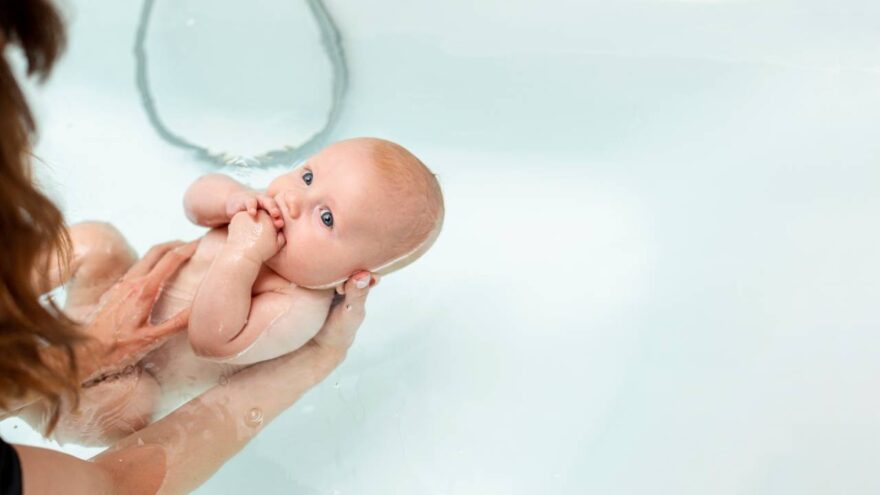
Bathing a baby in the first days and months often seems like a big task for parents, but with good preparation it can become a calm and pleasant part of care. Warm water can be soothing for the baby, calming and relaxing them, while giving parents an opportunity for gentle contact and bonding.
In the rest of this article, you’ll learn when to start bathing your baby, how often to bathe them, what the water should be like, and how to make the first bathing experiences safer and more relaxed.
It’s best to wait a few days before bathing your baby, until the umbilical cord stump falls off and the navel is completely healed.
Until then, it’s usually enough to gently clean your baby’s skin with a soft, damp cloth, paying special attention to the face, neck, folds, and diaper area.
Bathing a newborn should be introduced gradually, without rushing or pressure. If you’re not sure when the right time is for the first bath, it’s best to follow the advice of your visiting nurse or pediatrician, especially if the navel hasn’t completely healed yet or the skin seems sensitive.
It’s usually enough to bathe a newborn once or twice a week, while later the frequency can be adjusted according to age, skin condition, and how the baby responds to water. Daily bathing used to be common, but now we know that bathing too often can further dry out a baby’s sensitive skin.
If your baby enjoys bathing, finds it relaxing, and it becomes a nice part of the evening routine, you can bathe them more often, but with carefully chosen products and short time in the water. In the first months, you don’t need to use a lot of cosmetics, and often clean, warm water is enough.
If you do use bathing products, it’s important to choose gentle formulas designed for babies, such as baby bath products that don’t dry out the skin or disrupt its natural protective barrier.
For newborns, bathing should be short, usually around five minutes. A baby at this age doesn’t need to stay in the water for long, because the goal is to gently clean the skin, not to expose it further to water and possible drying.
As the baby grows and becomes more confident in the water, bathing time can gradually be extended. However, even then there’s no need to overdo it. It’s much more important that bathing is calm, safe, and pleasant than that it lasts a long time.
The best time to bathe a baby is the one that suits the rhythm of the baby and parents. Many babies enjoy a warm bath in the evening because it relaxes them before sleep, but bathing doesn’t have to always be part of the evening routine.
It’s important that the baby isn’t hungry, too tired, or upset.
Also, it’s not ideal to bathe the baby right after a meal. It’s best to choose a time when you’re calm too, have enough time, and can fully focus on the baby.
If your baby becomes fussy, cries, or doesn’t enjoy bathing before bedtime in the evening, you can move bathing to an earlier part of the day. There’s no one rule that works for all babies, so the routine should be built gradually.
The water for bathing a baby should be pleasantly warm, but never hot.
The ideal temperature is around 37 °C, which is close to body temperature. It’s safest to check it with a water thermometer, especially in the first weeks when parents don’t yet have a feel for the right temperature.
If you don’t have a thermometer, you can check the temperature with the inside of your wrist or elbow. The water should be pleasantly warm, so you don’t feel either a burning sensation from heat or coldness.
You shouldn’t pour too much water into the tub. It’s enough for the baby to bathe safely while you hold them steadily, and the head and upper body must always be above water. Never leave the baby alone in the tub, not even for a few seconds.
Bathing equipment should be ready before you undress the baby and put them in the water. You shouldn’t leave the baby alone during bathing, not even for a moment, so it’s important that the towel, diaper, clothes, and care products are within reach.
For bathing a baby, you usually need:
When the baby is very small, the equipment doesn’t have to be complicated. It’s much more important that everything is clean, safe, and prepared in advance. The tub should be stable, the water should be at the right temperature, and the room warm enough so the baby doesn’t get cold while you’re changing them.
If you’re wondering how to bathe a baby, the most important thing is to do everything slowly, safely, and without sudden movements. During bathing, the baby completely depends on your support, especially while they can’t yet hold their head independently or sit.
Before bathing, warm up the room so the baby won’t be cold when you undress them. Then fill the tub with water at the right temperature and check once more that everything you need is within reach.
Bathing will be easier if you prepare the towel, diaper, and clothes in advance, because after bathing the baby needs to be wrapped quickly and gently.
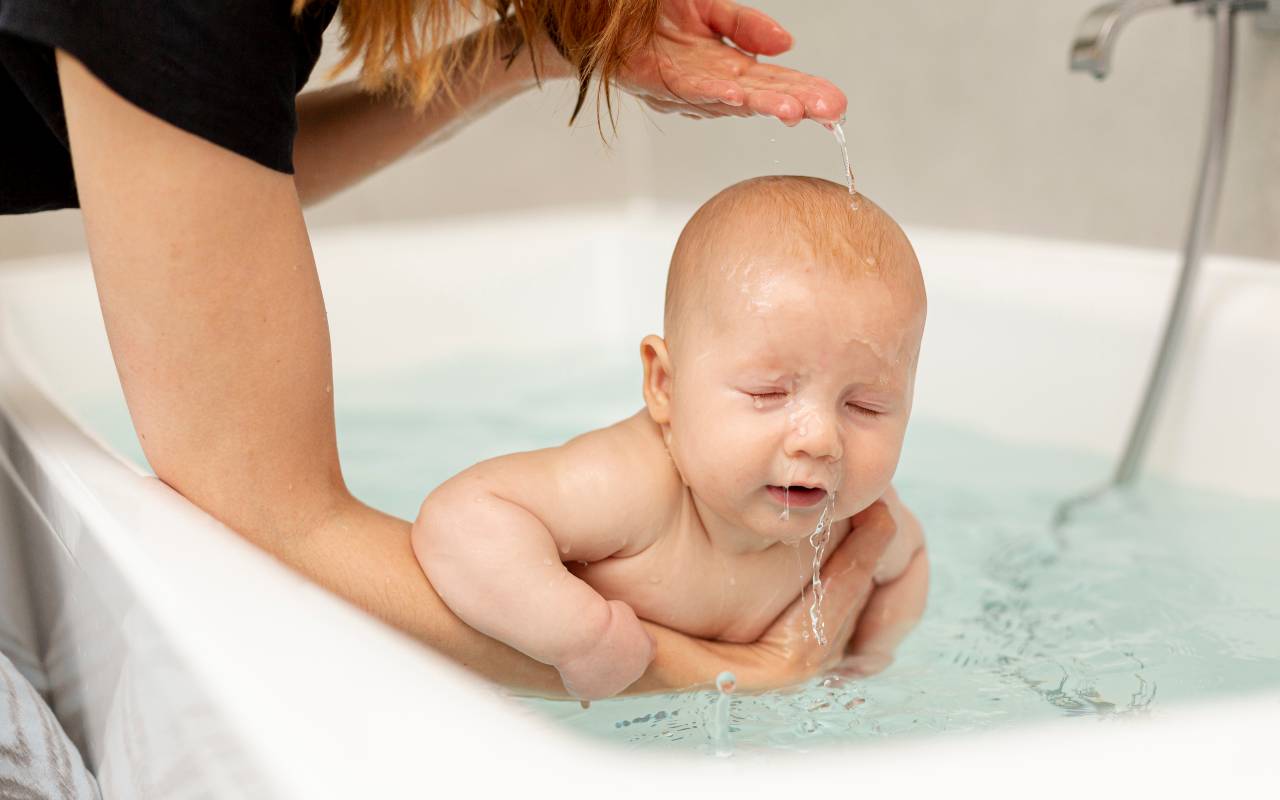
Lower the baby into the water gradually, feet first, then the rest of the body.
Keep one hand under the baby’s neck and head, while with the other you support the body and wash the skin.
Until you gain confidence, it can be helpful to have two adults bathing together. That way one person can hold the baby, and the other can hand things, wash, or help with the towel.
When thinking about how to bathe a baby, remember that rough rubbing isn’t necessary. The skin should be cleaned with gentle movements, with a soft cloth or hand.
Pay special attention to the folds on the neck, under the arms, behind the ears, on the hands, legs, and in the diaper area, because milk, sweat, clothing fibers, and dirt easily accumulate there.
The face is usually cleaned with clean water, without bath product or soap. Hair doesn’t need to be washed at every bath, and when you do wash it, use a small amount of gentle product designed for babies.
If you’ve used bath product, soap, or shampoo, gently rinse the skin with clean water. Then carefully lift the baby out of the tub and immediately wrap them in a towel.
Never add hot water while the baby is in the tub. If you need to add warmer water, first take the baby out, mix the water well, and check the temperature again.
After bathing, the skin should be dried by gentle patting, without rough rubbing. Dry the folds especially well, because moisture that remains in them can contribute to irritation.
After that, put on a clean diaper and dress the baby in comfortable clothes.
Baby bath products, soaps, and shampoos aren’t always necessary, especially in the first days.
Clean, warm water is often quite enough for gently cleaning the skin, especially if the baby doesn’t have noticeable sweating, dirt, or cradle cap. This applies to complete bathing of the baby; for washing just the diaper area after the baby has a bowel movement, you need to use soap.
After the first days and weeks pass, parents usually start using bath products and shampoos for hair, especially at a later age when babies really need hair washing and when they themselves enjoy a foamy bath.
When bathing products are used, it’s important that they are designed for babies, gentle and without harsh ingredients, so they don’t further dry out sensitive skin.
The best baby bath products are those that rinse off easily, don’t leave a heavy feeling on the skin, and are appropriate for the baby’s age. The same applies to shampoo – the best baby shampoo is gentle, suitable for a delicate scalp, and not used more often than necessary. You can find exactly these kinds of products in the Kosili brand range.
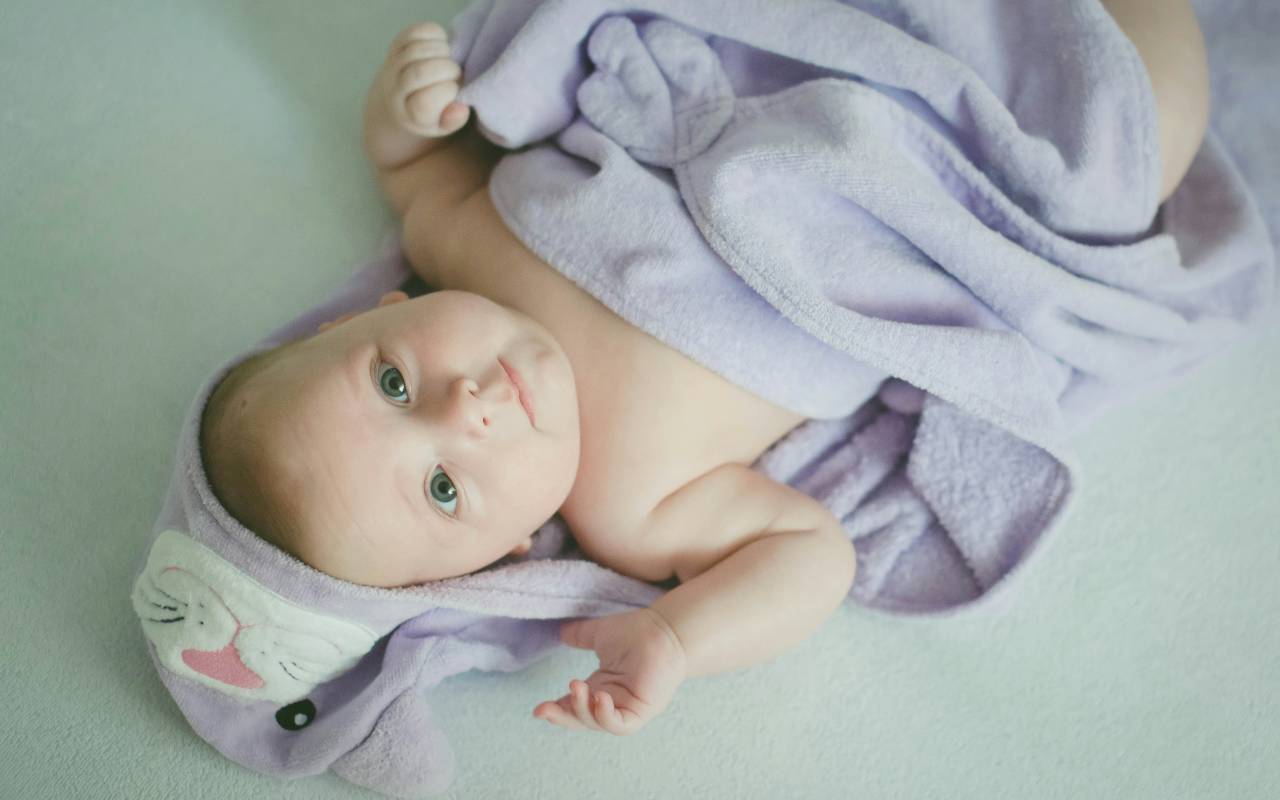
Baby care after bathing is just as important as bathing itself. When you take the baby out of the water, first wrap them in a towel and gently dry the skin. Pay special attention to the folds, neck, armpits, and diaper area.
If the skin is soft, hydrated, and without redness, additional products may not be needed after every bath. If the skin is dry or prone to irritation, you can apply a thin layer of appropriate care, such as baby body lotion, according to the skin’s needs.
Lotion shouldn’t be applied in a thick layer unnecessarily. A small amount is enough, especially on areas that are dry or prone to irritation.
Baby cream is most often used specifically, on areas that need extra protection or soothing, such as the diaper area, folds, or dry parts of the skin. It’s important not to apply it in a thick layer unnecessarily, but in a thin layer and on clean, dry skin.
If the baby is afraid of bathing, the most important thing is to shorten the bath, slow down, and try to calm them with a gentle voice, touch, or humming. Some babies don’t like water at first or get scared when you lower them into the tub, which doesn’t mean you’re doing anything wrong.
Everything is new to the baby, so they often need time to get used to bathing. It helps if you hold them gently close to you as you lower them into the water, with fewer movements and without too much stimulation.
If a larger tub seems intimidating, a smaller container or bathing with the additional support of another adult can help. For older babies, bath toys can distract them and make the water more pleasant.
It’s important not to force bathing. If the baby cries and can’t be calmed, it’s better to finish bathing, wrap them up, and try again another time, at a calmer pace.
The most common mistakes during baby bathing usually happen from rushing or uncertainty, and can easily be avoided with good preparation.
Avoid:
If you’re wondering how to bathe a baby without stress, the answer is in simplicity: prepare everything in advance, check the water, hold the baby safely, and don’t rush.
Bathing a baby doesn’t have to have an established schedule right away or look the same every day.
At first it’s quite enough for it to be short, for the water to be at the right temperature and to have everything ready before you undress the baby.
Over time you’ll more easily recognize what suits your baby – whether bathing in the evening or during the day works better for them, whether they calm down faster when you talk to them, hum, or hold them a little closer.
Some babies relax as soon as they feel warm water, while others prefer slower adjustment and shorter bathing.
So bathing shouldn’t be seen as a duty you have to perform perfectly, but as a routine you adapt to the baby. When the water, space, and baby cosmetics are well chosen, and you’re calm and present, even the first clumsy attempts quickly become safer and more pleasant.