How to dress a baby is one of the most common questions parents have, especially in the first months when they’re still not sure whether the baby is cold, too warm, or uncomfortable in their clothes. A baby’s skin is sensitive, and their body still doesn’t regulate temperature the way an adult’s does, so it’s important to choose clothing that’s soft, practical, and suited to the conditions your baby is in.
Below, you’ll learn what dressing your baby by temperature looks like, how to dress them for sleep, walks, going outside, summer, winter, and the first days after birth.
Dressing your baby by temperature means adjusting clothing to where your baby is, how warm the room is, whether they’re sleeping, resting, going outside, or sitting in a stroller. Your baby doesn’t always need the same number of layers, because conditions change throughout the day.
As a general rule, babies often feel comfortable with one light layer more than an adult in the same conditions. Still, that doesn’t mean you should always bundle them up extra.
If the room is warm, your baby is in a carrier or car seat, or already covered with a blanket, extra layers can be too much and cause overheating.
It’s best to check their temperature by touching the neck, chest, or back.
If the skin is warm and dry, your baby is most likely comfortable.
If their back is damp, their face is red, or the baby is unusually fussy, it’s possible they’re too warm.
Cold hands and feet aren’t always a reliable sign that your baby is cold, because they’re often cooler than the rest of the body.
Dressing your baby for sleep depends on the room temperature and whether you use a sleeping bag, pajamas, bodysuit, or a blanket.
The goal isn’t to keep your baby as warm as possible, but to keep them comfortable and stable through the night, without overheating.
For sleep, the most practical options are soft cotton bodysuits, sleepers, or pajamas that don’t constrict the tummy, neck, arms, or legs.
Clothes should be loose enough for your baby to move their arms and legs freely, but not so loose that they twist or get in the way during sleep.
If the room is warm, a lighter bodysuit or light pajamas are often enough. In a cooler room, you can add one more layer or use a sleeping bag of the right thickness. When you use a sleeping bag, the clothes underneath should be adjusted to its warmth, because too many layers can lead to sweating.
A hat shouldn’t be used during sleep in a warm room, unless your pediatrician or visiting nurse recommends otherwise. During the night, you can check your baby’s neck or back—if they’re warm and dry, there’s usually no need for extra covering or clothing.

For a walk, it’s best to adjust clothing to the temperature, wind, sun, how long you’ll be out, and whether your baby is in a stroller, carrier, or car seat. Layering is the most practical, because you can add or remove layers if the weather changes.
It’s useful to have in your bag:
Babies can easily get sweaty, dirty, or wet, so a spare piece of clothing can make going out much easier.
If you’re walking in cold weather, your baby may need a hat, jacket, snowsuit, or a blanket. If you go into a warm space—a shop, car, or shopping mall—extra layers should be removed or unfastened so the baby doesn’t overheat.
During the walk, check the neck, chest, or back, not just the hands. If your baby is calm and their skin is warm and dry, they’re most likely dressed appropriately for the conditions.
Dressing a baby in summer and winter differs mainly in the number and thickness of layers, but the goal is the same—to match clothing to the temperature of the environment and allow your baby free movement, restful sleep, and comfortable time outdoors.
In summer, choose light, breathable clothing made from natural materials, while in winter it’s more practical to dress in several thinner layers that can be added or removed as needed.
During summer, for staying in a warm indoor space, it’s usually enough to use a short-sleeve cotton bodysuit, a light wrap shirt, or a thin cotton outfit. If you’re wondering how to dress a baby at 25 degrees, one light cotton layer is usually enough, with a little hat or a thin blanket only if you’re going outside, going into an air-conditioned space, or the weather changes.
If you notice sweat on the neck, a damp back, facial redness, or fussiness, your baby is probably too warm.
If you’re wondering how to dress a baby in winter, the best choice is layers that keep them warm but are easy to adjust to the space. For staying at home, a cotton bodysuit, wrap shirt or top, bottoms, and socks may be enough if the room is cooler.
For going out, add a hat, gloves, a jacket, a snowsuit, or a blanket, depending on the temperature.
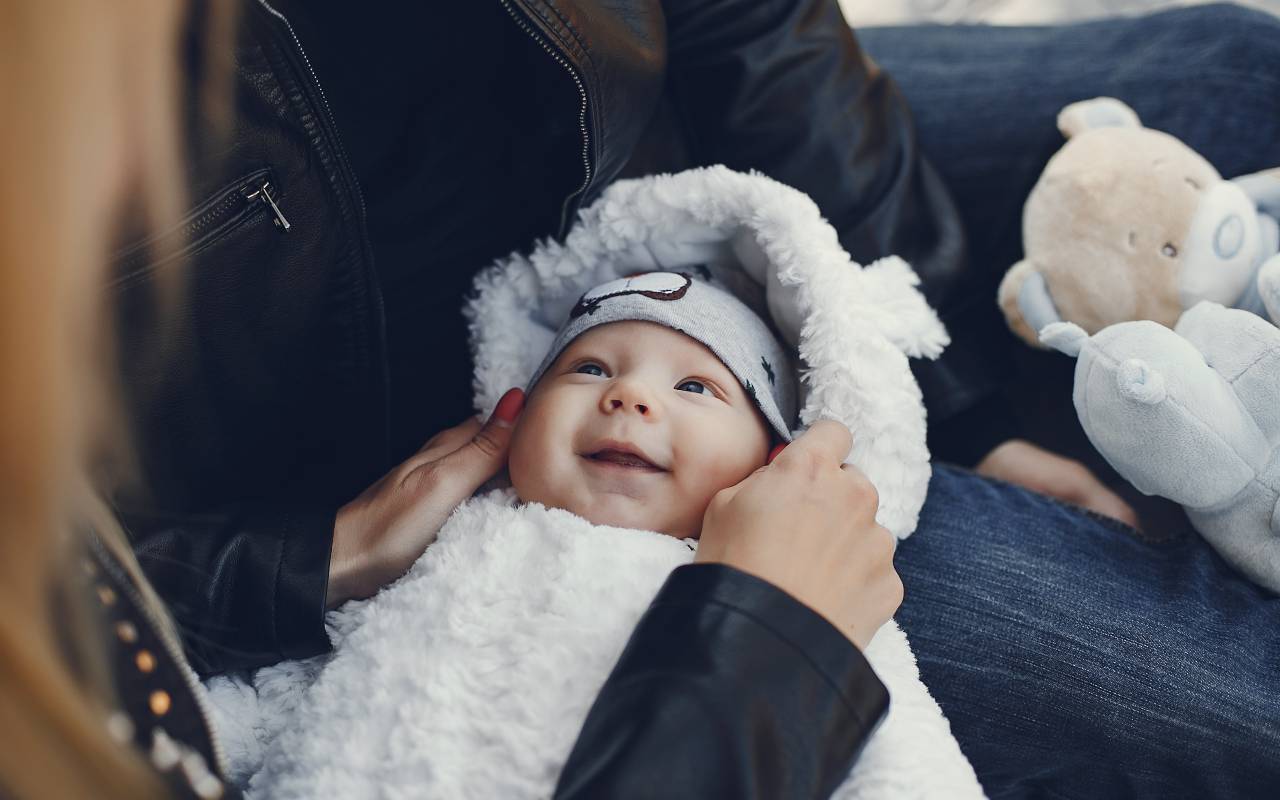
For leaving the maternity hospital, dress your baby in soft cotton clothing that matches that day’s weather and is easy to put on without a lot of movement.
In the first days, it’s especially important that nothing constricts the tummy and that clothing doesn’t press on the area around the belly button.
Most often, parents prepare a cotton bodysuit, wrap shirt or sleeper, socks, and a hat. If it’s cold outside, add a warmer layer, a blanket, or a snowsuit, while in summer it’s better to choose lighter pieces and protect the baby from direct sun.
Since the temperature can change between leaving the hospital, being in the car, and arriving home, it’s practical to bring one extra lighter layer or a blanket. That way, you can warm your baby up only if it’s really needed, without too many layers from the start.
Dressing a newborn should be gentle, simple, and unhurried, because the baby is still very small, sensitive, and doesn’t have stable head control. In the first days, the most helpful are pieces that are easy to put on and take off, without pulling over the head and without unnecessary moving of the baby.
Clothing that fastens in the front or between the legs makes diaper changes easier, because you don’t have to fully undress your baby every time.
Until the belly button heals, clothing and the diaper shouldn’t press on that area. Choose pieces without rough seams, tight elastics, hard appliqués, and tags that touch the skin directly, because they can cause discomfort, redness, or marks on your baby’s skin.
Baby clothes are often directly on the skin for hours—while the baby sleeps, lies down, feeds, or is out for a walk. That’s why the material isn’t just about looks, but also about how your baby feels throughout the day. The fabric should be soft to the touch, not scratchy, and allow the skin to breathe.
Cotton is a good choice because it’s light, breathable, and comfortable for everyday wear. It absorbs moisture, so the first layer—like a bodysuit or wrap shirt—doesn’t stay unpleasantly stuck to the skin if the baby sweats. For babies who easily react with redness or a rash, organic cotton can be a good option, because it’s produced without certain pesticides and harsh chemicals.
You don’t need the same outfit combination for sleep, a walk, staying in a warm room, or going out in cooler weather. Sometimes a light bodysuit will be enough, sometimes an extra layer will help, and sometimes the most important thing is having a dry spare piece of clothing on hand if the baby gets sweaty or dirty.
That’s why it’s more useful to follow your baby, not just the season or the temperature on your phone. The neck, chest, back, skin, and behavior often show better whether they’re comfortable than judging outdoor conditions alone.
When clothes are soft, materials carefully chosen, and laundry products gentle, everyday care becomes easier. With Kosili, cotton clothing, and a few practical essentials on hand, you’ll find a rhythm that works for both you and your baby more easily.